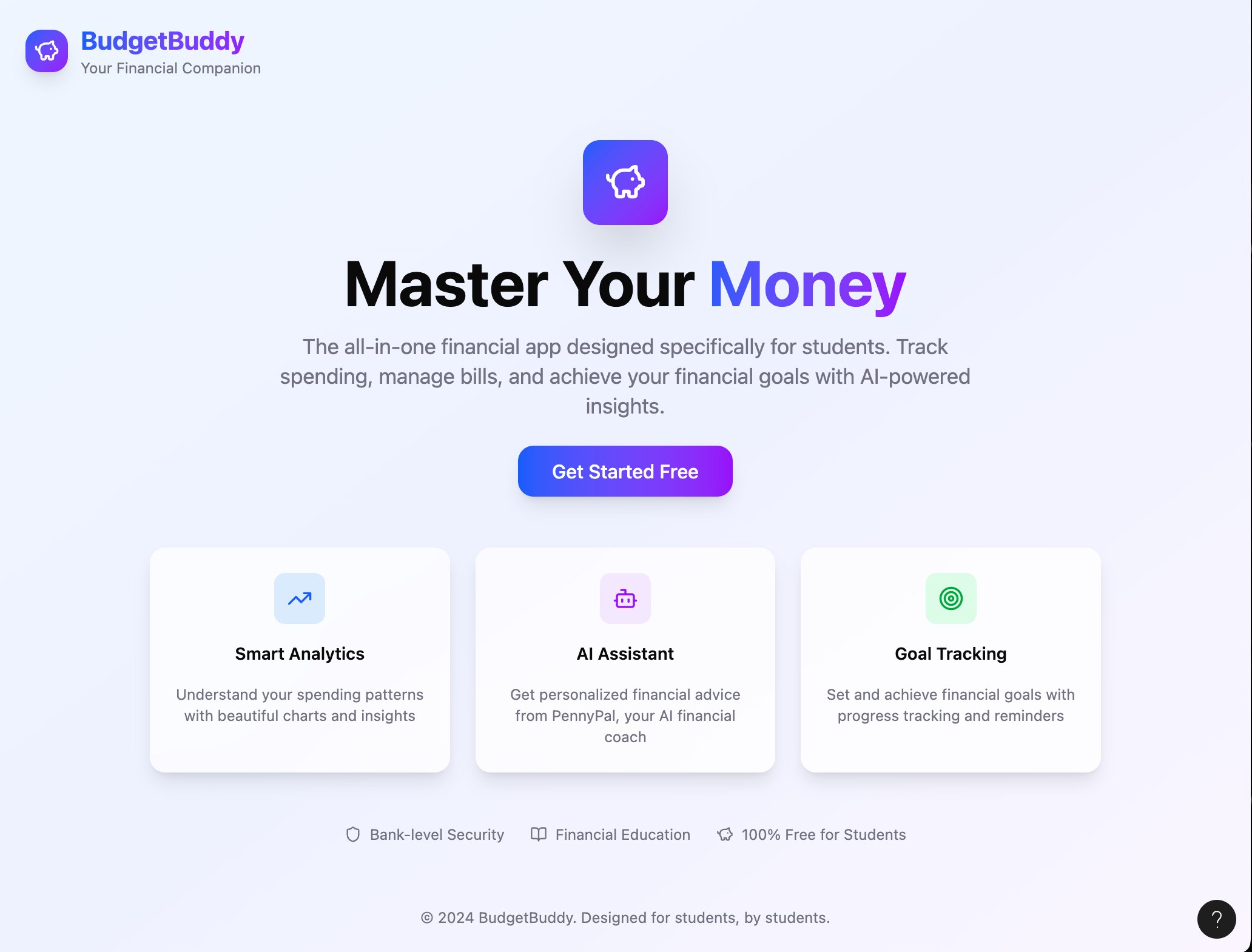
A personal finance tracker built from concept to launch — designed for clarity, built for real daily use.
Most personal finance apps are either bloated with features nobody uses or locked behind paywalls. For a first-time earner or student trying to actually track spending habits, the options were overwhelming or inaccessible.
BudgetBuddy was built to solve a simple problem: give someone a clean, fast way to log expenses, set budgets, and see where their money is actually going — without signing up, without subscriptions, without noise.
Solo 0→1 build. I wrote the product spec, made all architecture decisions, designed the UI in Figma, and built the full stack — Node.js REST API, MongoDB, and a React frontend with custom data visualizations.
This project sharpened my ability to make fast, defensible technical decisions without a team to consult — a core PM+eng skill.
The most valuable lesson: scoping is a product skill, not a technical one. The features I cut were just as important as the features I built. Keeping BudgetBuddy focused meant I actually shipped it, instead of abandoning it halfway through feature creep.
I also learned that building your own data visualizations — while slower — gives you far more flexibility and forces you to understand your data model more deeply than plugging in a chart library.